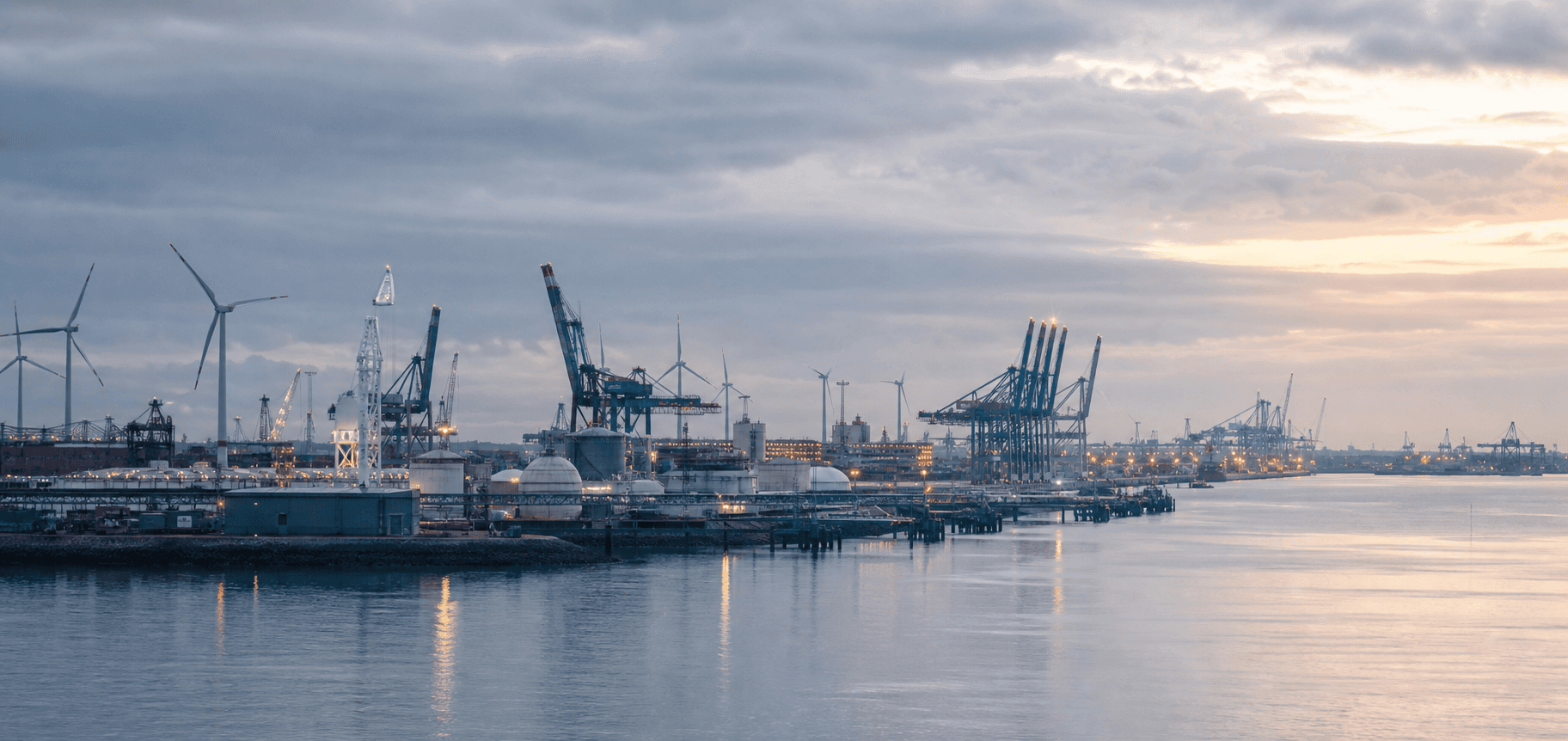
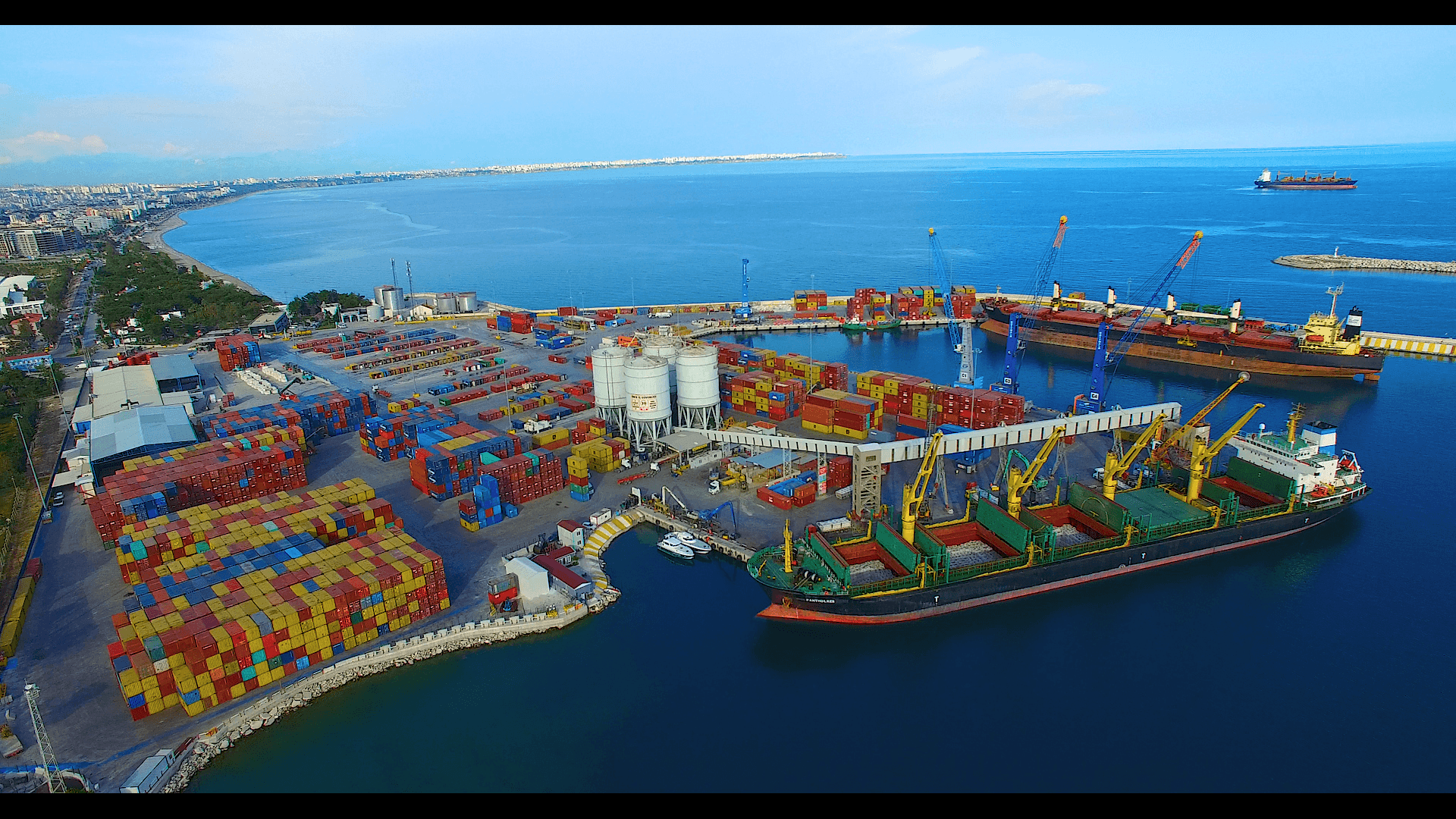
A broad port landscape spanning industrial, liquid bulk and container terminal environments

Port & terminal environments

Different cargo.
Different operating realities.

Container, general cargo, dry bulk, liquid bulk, Ro-Ro and industrial terminals share a need for control—but not the same operational model. SOLONPORT adapts the technology foundation to those differences.

Explore terminal environments
Six terminal environmentsEqual portfolio relevanceOne connected technology direction

01 — Operational spectrum

Experience across
different cargo realities.

The common foundation is terminal control. The operational model changes with cargo, movement, storage, equipment and commercial rules.
A mixed port environment with container, general cargo and industrial terminal operations
Mixed terminal environmentDifferent cargo realities.
One connected operational context.

Container handling, vessel operations, storage infrastructure and industrial workflows share the same terminal landscape without becoming the same operation.

02 — Terminal environments

Designed around
the way cargo moves.

Each environment below connects operational realities with the relevant parts of the SOLONPORT portfolio.
01Container

Container Terminals

Container operations depend on coordinated planning, precise yard decisions and continuous alignment between vessel, gate and field activity.

  • Vessel operations
  • Yard planning
  • Gate processes
  • Rail & intermodal operations
  • Equipment coordination
02General Cargo

General Cargo Terminals

General cargo requires adaptable workflows because cargo characteristics, handling methods, storage rules and commercial processes can change from operation to operation.

  • Cargo-specific handling
  • Lot & package tracking
  • Storage processes
  • Rail wagon operations
  • Landside coordination
03Dry Bulk

Dry Bulk Terminals

Bulk operations connect material flow, stock visibility, weighing and handling equipment across vessel, storage and land transportation processes.

  • Material movements
  • Stock visibility
  • Weighing workflows
  • Bulk railcar & weighing
  • Handling coordination
04Liquid Bulk

Liquid Bulk Terminals

Liquid bulk operations connect vessel loading and discharge with pipeline, coupling and hose processes, together with storage, transfer and delivery workflows.

  • Vessel loading & discharge
  • Pipeline processes
  • Coupling & hose operations
  • Liquid cargo storage
  • Liquid cargo delivery
05Ro-Ro

Ro-Ro Terminals

Ro-Ro and Ro-Ro Ferry operations bring vessel, vehicle, dock and gate activity together within one coordinated operational context.

  • Ro-Ro operations
  • Ro-Ro Ferry operations
  • Vessel & dock processes
  • Gate monitoring
06Industrial

Industrial & Private Terminals

Private terminal operations often sit inside a larger industrial flow, making integration with production, logistics, weighing and enterprise processes essential.

  • Production logistics
  • Material flows
  • Weighing processes
  • ERP connectivity

03 — Rail-connected operations

One rail interface.
Different cargo flows.

SOLONPORT connects rail arrivals, wagon movements, loading and discharge activities, cargo records and terminal resources within the same operational context.
01 / Intermodal flow

Container rail operations

Train and wagon registration, container–wagon association, loading and discharge sequencing, yard transfers and intermodal visibility.

02 / Cargo flow

General cargo by rail

Wagon-based cargo records, lot and package tracking, loading or discharge activities and landside coordination.

03 / Material flow

Dry bulk rail movements

Hopper-wagon handling, weighing, material transfer, stock updates and loading or discharge control.

04 — Operational variation

One technology foundation.
Different operating models.

A terminal system becomes meaningful when it reflects the rules of the operation rather than forcing every terminal into the same template.Explore products & technologies
01

Cargo structure

Units, lots, packages, stockpiles, tanks and vehicles create different information models.

02

Movement logic

Vessel, yard, gate, transfer and production flows require different operational controls.

03

Storage model

Slots, open yards, warehouses, silos and tanks each bring their own visibility needs.

04

Commercial rules

Contracts, services, measurements and enterprise processes shape how operations are recorded.

05 — Operational experience

Different environments.
A practical foundation.

SOLONPORT brings terminal knowledge across multiple cargo segments, connecting operational understanding with configurable technology.

Project conversations can focus on the operating model, constraints and technology direction relevant to each terminal.

Every terminal has its own reality.

Let's begin with
yours.

Start a conversation